
Samsung asks a US judge to delay an injunction on two standard-essential patents Huawei won in China.

AndroidPIT-huawei-mate-9-vs-samsung-galaxy-s7-edge-1208-w782

Samsung has asked a US judge to delay an injunction on two standard-essential patents Huawei won in China.

In January, the Intermediate People’s Court in Shenzhen ruled Samsung infringed two of Huawei’s SEPs involving 4G wireless standards and failed to comply with obligations to negotiate on fair, reasonable, and non-discriminatory (FRAND) terms.

As Samsung’s last move in years-long legal battle over licensing deals for the two smartphones makers’ portfolio of SEPs, Samsung asked U.S. District Judge William Orrick to delay Huawei’s enforcement of the Chinese injunction while the two companies fight it out in his courtroom.

In the meantime, Samsung is appealing the Shenzhen court’s ruling.

Anti-Suit Injunction Is Becoming A Popular Mechanism To Manage Multi-jurisdictional SEP Litigation

Litigation concerning standard-essential patents (SEPs) has become increasingly global, with parallel litigation occurring over the same issues in multiple jurisdictions throughout North America, Europe, and Asia.  For example, Apple and Samsung litigated their smartphone patent dispute in the U.S., Germany, France, Italy, the Netherlands, UK, Korea, Japan, and Australia. As a result, litigant have sought mechanisms to coordinate these actions both to manage costs and to avoid inconsistent and incompatible results. One procedural mechanism that has been used to manage multi-jurisdictional litigation in SEP disputes in the anti-suit injunction.

An anti-suit injunction is an interlocutory remedy issued by a court in one jurisdiction which prohibits a litigant from initiating or continuing parallel litigation in another jurisdiction. Anti-suit injunctions thus contain litigation costs and reduce the likelihood of inconsistent results by ensuring that issues are resolved in one jurisdiction before they are litigated elsewhere.

In the SEP context, anti-suit injunctions can be particularly powerful for prospective licensees alleging that SEP holders have failed to comply with their FRAND licensing obligations. Specifically, a court reviewing a SEP holder’s compliance with a FRAND licensing commitment may issue an anti-suit injunction to prevent the SEP holder from bringing foreign patent infringement claims until the FRAND licensing dispute has been resolved in the issuing jurisdiction.

Three Approaches For Analyzing Anti-Suit Injunctions Prohibiting Foreign Suits
Courts have struggled to articulate a uniform standard for deciding when to grant an anti-suit injunction. The circuit split in the United Sates is illustrative of this difficulty.

Currently, there are three approaches for analyzing anti-suit injunctions prohibiting foreign suits. The three approaches are commonly referred to as the liberal, the conservative, and the middle-ground approach. The liberal approach as been adopted by the Fifth, Seventh, and Ninth Circuits, while the conservative approach has been adopted by the District of Columbia, Third, Sixth, and Eighth Circuits. The middle-ground approach has been adopted by the First and Second Circuits.

            Two Threshold Criteria 

The three approaches begin with two common threshold criteria. Specifically, (1) whether the parties are the same; and (2) whether a resolution of the U.S. action is determinative of the foreign action.  These threshold criteria have been construed broadly and are satisfied when the party seeking the injunction is significantly involved in or affected by the foreign litigation and the “resolution of the case before the enjoining court [would] be dispositive [for] the enjoined action.”  China Trade and Dev. Corp v. M. V. Choong Yong (2d Cir. 1987, 36).

             Divergence

Once the threshold criteria have been satisfied, the approaches diverge.

Under the liberal approach, the court may grant an anti-suit injunction if any one of the following factors is sufficiently satisfied: “whether the foreign action frustrates a policy of the United States; (2) whether the foreign action is vexatious; (3) whether the foreign action is a threat to the rem or quasi in rem jurisdiction of the U.S. court; (4) whether the proceedings in the other forum prejudice other equitable considerations; pr (5) whether adjudication of the same issues in separate actions would result in delay, inconvenience, expense, inconsistency, or a race to judgment.”

Under the conservative approach, courts emphasize “comity dictates the foreign anti-suit injunctions be issued sparingly and only in the rarest of cases.” Goss Int’l Corp. v. Man Roland Druckmaschinen Aktiengesellschaft (8th Cir. 2007, p.359) (quoting Gau Shan Co. v. Bankers Trust Co. (6th Cir. 1992, p.1354)). Accordingly, courts adopting the conservative approach usually rely exclusively on “whether the foreign action frustrates a policy of the United States” and “whether the foreign action is a threat to the rem or quasi in rem jurisdiction of the U.S. court” because these factors are critical enough to justify the compromise of deeply held principles of international comity.

Under the middle-ground approach, there is “a rebuttable presumption against the issuance of an [anti-suit injunction]” due to comity concerns. Quaak v. Klynveld Peat Marwick Goerdeler Bedrijfsrevisoren (1st Cir. 2004, p.18). The presumption can be overcome by analyzing the five factors elaborated by the liberal approach and weighing them against competing comity concerns. Id.

Finally, under all three elements, if the court determines that the threshold criteria are satisfied and the pertinent factors weigh in favor of issuing an anti-suit injunction, the court considers whether the anti-suit injunction’s “impact on comity is tolerable.” E. & J. Gallo Winery v. Andina Licores S.A. (9th Cir. 2006, p.991).
 

Antitrust Probes: China’s Powerful Weapon Against U.S. Tariffs

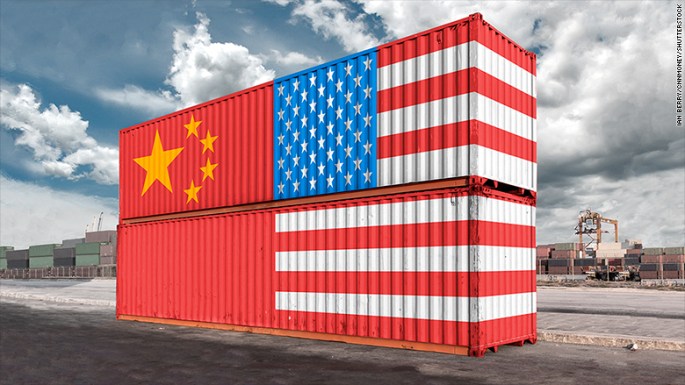
160603130407-china-us-trade-780x439

On Monday, U.S President Donald Trump approved imposing tough tariffs on washing machines, after the U.S. International Trade Commission found these washing machine imports were “a substantial cause of serious injury to domestic manufacturers.”


China is the world’s largest manufacturer of solar panels and exported $3 billion worth of washing machines last year.


China’s Ministry of Commerce condemned the tariffs on Tuesday, calling them a misuse of trade measures, and said it hopes Washington will show restraint in imposing trade restrictions.


This might give President Xi Jinping just another reason to strike back. One of the tactics the Chinese government could and has used is to subject well-known U.S. companies with large Chinese operations to antitrust probes.


It is not news to foreign firms with Chinese operations that the Chinese government targets antitrust enforcement on them.


Most antitrust enforcement is carried out under China’s Anti-Monopoly Law, which went to effect in 2008. In addition to stated goals of restraining monopolies and protecting fair market competition, the law seeks to “promote the healthy development of socialist market economy.” Three agencies are in charge of enforcement:


Ministry of Commerce (MOFCOM): MOFCOM is responsible for reviewing M&A transactions and other types of proposed business concentrations.

National Development and Reform Commission (NDRC): NDRC manages enforcement of price-related conduct.

State Administration for Industry and Commerce (SAIC): SAIC is in charge of investigating non-price-related monopolistic behavior, including monopoly agreements, abuse of market dominance, and monopoly control.


Below is a list of U.S companies that have been subject to antitrust scrutiny in China:

China presses Microsoft in antitrust probe

U.S. tech firms under increasing scrutiny in China

Qualcomm to pay $975 million to resolve China antitrust dispute


The United States Supreme Court to Hear Price-Fixing Case Against Chinese Vitamin C Manufacturers

How much deference a U.S. court should give to a foreign government’s characterization of its own law? This question is now before the Supreme Court.


On January 12, 2018, the Supreme Court decided to hear a price-fixing case against Chinese Vitamin C manufacturers where the Court must decide whether U.S. judges must defer to Chinese’ government’s interpretation of its law.


Who is suing whom?


The plaintiffs are U.S. vitamin C buyers.


The defendants are Hebei Welcome Pharmaceutical and North China Pharmaceutical Group Corporation. They are Chinese vitamin C manufacturers.


What is the claim?


The plaintiffs filed an antitrust class action against Chinese vitamin C manufacturers, alleging that the defendants established an illegal cartel to cut down the supply of vitamin C in order to boost the price for sale to the U.S. companies.


What is the defense?


The Chinese manufacturers asked the court to throw the case out.


They conceded that they fixed prices and quantities of Vitamin C, but argued that they were required to do so under Chinese law.


What is so special about this case?


For the first time ever, the Chinese government, for the first time, appears as amicus curiae in a U.S. court to submit a statement supporting the defense of Chinese companies.


The Ministry of Commerce of the People’s Republic of China explained that it required all Chinese vitamin C manufacturers to agree on the price at which vitamin C would be sold abroad.


What did the district court hold?


Despite the Ministry’s amicus brief, the district court denied the motion, stating that the factual record was “simply too ambiguous to foreclose further inquiry into the voluntariness of defendants’ actions.” On a subsequent motion for summary judgment, the district court, again, “decline[d] to defer to the Ministry’s interpretation of Chinese law.”


What did the jury decide?


The case went to the jury, which awarded the U.S. companies $147 million in damages.


What did the court of appeal decide?


On appeal, the U.S. Court of Appeals for the Second Circuit reversed ruling that it was “bound to defer” to the Chinese government’s characterization of Chinese law.


The U.S. companies petitioned to the Supreme Court to hear their case.


What is the issue in front of the Supreme Court?


The question is: whether a court may exercise independent review of an appearing foreign sovereign’s interpretation of its domestic law, or whether a court is “bound to defer” to a foreign government’s legal statement, as a matter of international comity, whenever the foreign government appear before the court.


What to expect?


This would be an interesting case to follow, as it raises delicate issues on the political, economic, and legal questions about U.S. courts’ approach to a foreign government’s interpretation of its own law.


Since this case is the first time the Chinese government appears as “friend of court” in the U.S., the Supreme Court decision would have an impact on whether we are going to see more Chinese government’s involvement in international litigation, especially in the U.S.


Stay tuned for further developments . . .